
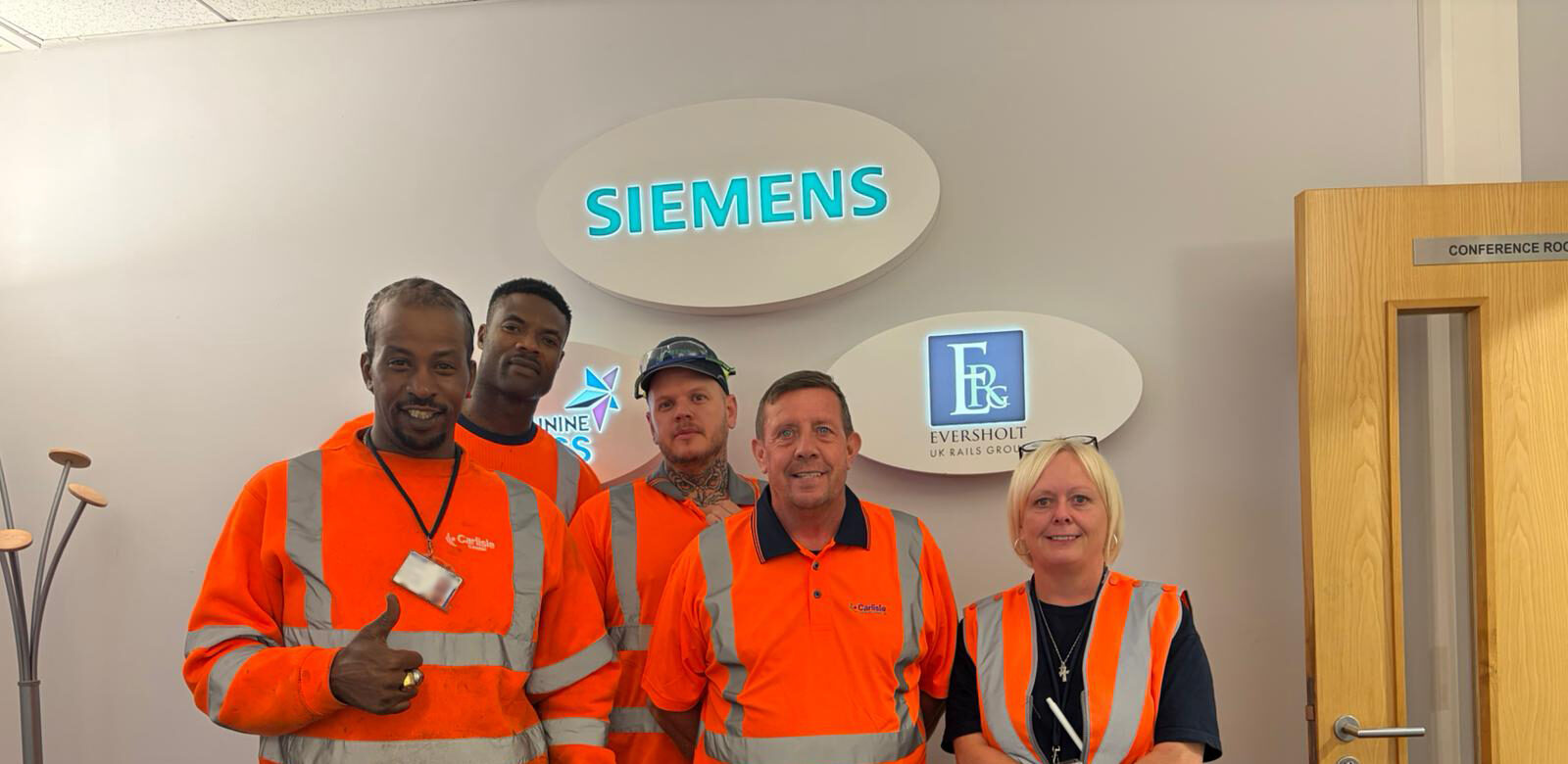
Carlisle and Siemens Celebrate Six Years of Partnership and Look Ahead to the Next Five
It is absolutely rewarding to see a partnership grow in years, in the work delivered, the trust built between teams and the confidence to keep
As a supporter of the Armed Forces Covenant, Carlisle Support Services recognises the strong link between military experience and security careers. Veterans bring discipline, resilience, and the ability to stay calm under pressure, skills that are invaluable in the security sector.
In this article, we highlight the journey of Peter Broad, a former infantry soldier with over two decades of service, now working as a Security Supervisor at Birmingham Solihull Mental Health Trust (BSMT). Peter shares his insights on how his military background has shaped his approach to security work.
At just sixteen, Peter enlisted in the British Army and joined the Royal Green Jackets infantry regiment. Staying within this regiment for three years, Peter later left the army for two years before ultimately rejoining at twenty-one as part of The Staffordshire Regiment. Serving for a total of 24 years in Infantry regiments, Peter’s role took him to Iraq and Bosnia, completing tours abroad in Africa, Canada, and America, with times when he even lived abroad in Cyprus and Germany.
Throughout his twenty-four years in the armed forces, Peter had access to a wide array of progression opportunities. Having started as a private soldier in specialist weapons and rifle companies, Peter later moved to a transport support platoon, and within a few years, he was promoted to Lance Corporal and then Corporal with management and personnel oversight duties.
In the later part of his career, Peter moved within the Regimental police, where his role involved helping to run the detention centres where forces personnel might find themselves for failing to follow everyday orders or more serious infractions, and the regimental team would help to correct these behaviours. These individuals would be at a crossroads in their careers; depending on the severity of the infraction, it would determine if the individual would then be further sent to the Military Corrective Training Centre (MCTC) based in Colchester for further time to be served. With soldiers only able to serve up to 30 days in these detention centres, his team had a short amount of time to try to get through to these individuals to help correct these behaviours so that when they move on, these individuals have had a positive impact through the experience.
Peter found this phase impactful, reflecting, “You don’t realise what soldiers get up to. At the end of the day, they are still human beings, they just wear a uniform, and can get in trouble just as easily as any civilian.”
The shift from a regimented military lifestyle to civilian life can be tough, which is why many veterans, like Peter, find themselves in security roles that align closely with their military training. With synergies between skills for the forces and security work, it is clear why there is such a natural path for individuals just like Peter to utilise skills he learnt in the army in practice at the Trust. With the regimented patrols, clear structure, and ability to respond to spontaneous situations, these military-instilled skills can be applied daily, such as remaining calm under pressure, following procedures, and managing unpredictable situations, making veterans like Peter an ideal fit for roles in healthcare security.
This methodology of thinking and natural understanding between soldiers and forces personnel is an area that Peter particularly misses, as deep bonds, camaraderie and friendships are formed within these high-stress environments and are “for life, not just whilst serving, you take these friendships to your grave with you and beyond”.
Outside of this ‘world’ and because of the years of strict and regimental practices, forces personnel can struggle to build these connections with civilians. Alongside this, mental health remains a challenging topic, particularly as those who haven’t served don’t fully understand the complexity and realities of life in the forces. As a result, tough conversations are easier with others who ‘get it’. Peter shares, “Civilians don’t understand us, we have a different sense of humour, we are very well disciplined. Soldiers are very blunt and say it as it is, and we get the job done, there is no messing around”. This difference in mindset can make it difficult for ex-forces personnel to form connections with those who haven’t served. As Peter explains, “when you start training, they take all the civilian out of you to turn you into a soldier, but when you come into the civilian world after a long time, there is no way of turning you back into a civilian”.
With commitments such as the Armed Forces Covenant, this has become much easier for providers like us and others to be committed to helping those regulars, reservists and veterans find employment outside of the Forces. Peter’s journey reflects how such initiatives create pathways for veterans to continue using their valuable skills in civilian roles, especially in industries like security, where these traits are essential.
For many individuals like Peter, the bonds and friendships made during the army have had a real impact on their lives: “there’s nothing that your brothers and sisters wouldn’t do for you, and at the end of the day you lay your life down for each other”, with these bonds continuing to influence their lives well beyond their military service.
Peter’s journey is more than just a military career; it’s a story of discipline, resilience, and loyalty. His experiences across the globe shaped him into a respected leader, ready to face the challenges and opportunities of civilian life. While the transition to civilian life can be complex, the skills, values, and deep-rooted camaraderie forged during service continue to define who he is today. Now applying those strengths within the healthcare environment, Peter’s story is a powerful reminder of the lasting impact of military service and the importance of supporting veterans as they navigate life beyond the forces.
It is absolutely rewarding to see a partnership grow in years, in the work delivered, the trust built between teams and the confidence to keep

Creating genuinely safe environments across public spaces and transport networks relies on seamless collaboration between our frontline teams, industry partners, and law enforcement. We have

The cold reaches the gates long before London wakes. Yet through winter rain, biting winds and the long hours of the night, Carlisle’s security officers
Providing flexible, on-demand support to help organisations build resilience, mitigate risks, and adapt to the ever-changing political, socio-economic, and environmental landscape to deliver seamless event experiences.
Managing trees and vegetation for the UK’s public infrastructure and commercial spaces.
Delivering aesthetically pleasing environments whilst eliminating potential hazards and operational disruptions caused by vegetation.
Provide fully vetted, accredited officers equipped with the latest technologies to secure and protect your people, premises, assets and the wider public.
Providing bespoke services that identify site specific vulnerabilities and address complex challenges to mitigate risks.
Maintaining high facility standards and minimising service disruptions across the UK rail network.
Delivering exceptionally clean environments at optimal cost and positive environmental footprint with unrivalled quality control across nationwide operations.
Delivering seamless passenger experiences whilst protecting revenue and achieving operational excellence.
Providing flexible, on-demand support to help organisations build resilience, mitigate risks, and adapt to the ever-changing political, socio-economic, and environmental landscape.
Deploying balanced crowd management strategies for optimal safety and seamless visitor experiences.
Delivering seamless visitor experiences across the UK’s biggest venues, stadiums and exhibition centres.
Transforming customer journeys with innovative car parking solutions that maximise operational control and revenue.
Enhancing and maintaining site aesthetics for optimal nature, commercial infrastructure, and community harmony. We aim to deliver beautiful scenery whilst eliminating potential hazards and operational disruptions caused by vegetation.
We streamline cleaning and facilities services that help organisations maintain exceptional standards across single and multi-site operations.
We offer a total turnkey solution from initial design and product selection through to installation and commissioning. Our customers benefit from benefit from around-the-clock protection for optimal peace of mind that comes from working with a trusted alarm monitoring service.
Our range of fire life safety solutions are designed to prevent, detect and contain fire and where necessary enable a safe and timely escape.
From the initial Fire Risk Assessment through to the design and installation of fire detection and fire suppression systems and ongoing maintenance and monitoring contracts, we provide you with a one stop fire protection solution.
From security-cleared operations with MOD-affiliated organisations to supporting the UK’s rail infrastructure and securing the Highest Court of the British Isles alongside countless major venues across the UK, we provide fully vetted, accredited officers equipped with the latest technologies to secure and protect your people, premises, assets and the wider public.
Fulfilling the most complex single and multi-site cleaning requirements at an award-winning standard for over 30 years.
Providing an extensive range of Soft and Hard FM services to help you streamline management and eliminate operational disruptions.
Undertaking routine cleaning to maintain the highest standards in cleanliness and hygiene for exceptional environments.

