
Highlighting our 2026 RailStaff Awards Finalists
It is one week on since the 2026 RailStaff Awards finalists were announced, and we are extremely proud to see ten nominations of our staff

The UK’s security landscape is navigating its most significant transformation in a generation. As the boundaries of traditional policing are stretched by the complexities of modern crime, high-speciality offences, digital manipulation and shifting social dynamics, it indicates a fundamental redesign of the relationship between private expertise and the state as a national necessity.
In 2026, the industry has transitioned into an era of active stewardship and advanced models of safety. This represents a strategic pivot from the reactive models of the past towards a future of predictive, high-EQ (emotional quotient) protection that goes beyond premises protection and emotional intelligence to the very experience of public life.
We are moving away from legacy divisions toward a unified safety fabric, a professionalised ecosystem where human intuition and digital intelligence operate as a single and well-coordinated force.
1. The Scale of Responsibility
This shift is underpinned by the growth of the UK physical security market, now valued at £9.9 billion annually, which is on a trajectory to reach £12.9 billion by 2030. Within this landscape, a licensed workforce of 460,000 professionals effectively outnumbers the police four-to-one, forming the primary frontline of national protection.
While the latest British Retail Consortium Crime Report 2026 indicates that retail violence has slightly decreased from previous historical highs, the industry still faces an unacceptable 1,600 incidents of abuse against shopworkers every single day.
Generally speaking, when social tension interacts with public-facing spaces, a security framework cannot simply rely on static observations but needs a proactive risk mitigation driven by advanced physical-digital cohesion.

2. Data as the Nervous System

We are witnessing a transition from observing to orchestrating. Vinny Singh, our Managing Director for Security and Events (North), highlights how this intelligence-led model is transforming high-pressure environments like the NHS.
“By gathering data on customer interactions, emergency department counts, and footfall trends, our teams can now provide detailed insights into what is going on, predict what is likely to happen, and form a response before a situation escalates.”
As Simon Pratt, our Managing Director for Security and Events (South) notes, the synergy between data and professional expertise allows for “prompt and informed deployments.”
“Using heat maps and real-time situational awareness, the industry is moving away from the static presence model to a more interactive one.” If the data shows a building has low footfall, the 2026 trend is to replace the physical presence with access control and remote monitoring, redeploying officers to high-risk zones where they are actually needed.
2. AI, Processes, and the Interpretive Officer

With the emergence of AI, there are systematic tools and bots that act instantly which replace standalone alerts. We have seen frontline reshaped to boost confidence, ROI and reduce threat risks. While AI can identify an unattended bag or a known offender through facial recognition instantly, it remains a tool of suggestion, not execution.
Adrian White, our Chief Operating Officer explains that certain professional roles have evolved into those of “Data Interpreters.”
“AI could identify the difference, but it’s the human psyche that provides the essential cognitive layer to it.”
“AI gives us the information, but the human decides if they are comfortable or uncomfortable with what the data is showing. This synergy eliminates ‘alarm fatigue,’ ensuring that when a professional intervenes, they do so with a 100% certainty that technology alone cannot provide.”
3. The Safety Host Concept
In prestigious public environments like Olympia, Manchester Central, and the National Theatre, the concept of the security professional is being redefined as a Safety Host (as defined by the emerging trends). This trend merges high-level safeguarding with premium hospitality, acknowledging that security is often the first point of contact for the public.
Adrian notes that, “this evolution includes the mastery of Local Intelligence.” A modern professional is trained to guide a visitor to a hotel or station with the same precision and intellect they use to monitor a crowd.
This “experience-enabling” mindset, as Simon also observes, ensures that, “security actually enhances the atmosphere of a venue. In 2026, the most effective deterrent is a professional who is deeply embedded in the local environment and seen as a helpful authority by all members of public and staff alike”

4. Behavioural Detection and the Sting Strategy

According to the ONS Crime and Justice bulletin, shoplifting offences rose by 5% to 519,381 in the year ending September 2025, accompanied by an increase in retail and consumer related crimes. The industry has moved ‘outside the gate!’ Vinny says, that in retail, “the security’s focus has shifted from catching individual shoplifters to disrupting Organised Crime Groups (OCGs).”
We are seeing a surge in Behavioural Detection Officers (BDOs) across the UK, these are specially trained professionals, often in plain clothes, who mingle with crowds at major events to spot pre-incident signatures.
This is particularly evident in retail, where the trend has shifted from catching individual shoplifters to disrupting Organised Crime Groups (OCGs). Adrian casually says that it’s the move towards “special sting teams” that wait outside stores for known offenders identified by advanced tools powered by AI.
It shows us a clear move towards an assertive, intelligence-led approach that prioritises the disruption of criminal networks over the passive observation of theft, today and the times to come.
5. A Legal Mandate for Preparedness with Martyn’s Law Implementation
The implementation of Martyn’s Law (Terrorism Protection of Premises Act) 2025 is effectively ending the era of ‘optional’ security. For any site with a capacity over 200, the Duty of Preparedness is now a legal mandate.
This has brilliantly raised the professional benchmark. Venues would now demand granular and verifiable proof of vetting, advanced safeguarding trainings, counter-terrorism qualifications and full alignment with the Act. As Adrian points out, this creates a heavy reliance on In-House Models and Self-Delivery.
In an industry often hampered by the lack of supply chain transparency, the true leaders today are those who avoid subcontracting to ensure they have total ‘chain of custody’ over their training, auditing, and staff members.

The implementation of Martyn’s Law (Terrorism Protection of Premises Act) 2025 is effectively ending the era of ‘optional’ security. For any site with a capacity over 200, the Duty of Preparedness is now a legal mandate.
This has brilliantly raised the professional benchmark. Venues would now demand granular and verifiable proof of vetting, advanced safeguarding trainings, counter-terrorism qualifications and full alignment with the Act. As Adrian points out, this creates a heavy reliance on In-House Models and Self-Delivery.
In an industry often hampered by the lack of supply chain transparency, the true leaders today are those who avoid subcontracting to ensure they have total ‘chain of custody’ over their training, auditing, and staff members.
6. The Talent Evolution and Diversity

The industry currently faces a vital challenge of a projected requirement for thousands of new professionals by next year. Resolving this talent squeeze requires a radical rebranding of the career. The outdated stereotype associated with security are now being replaced by a tech-forward and high-integrity career path.
With a concerted push for diversity, a growing focus is now being placed on flexibility. Official Security Industry Authority statistics show that female licence holders have steadily risen toward 20% of the active workforce and it is also good to see that the industry is finally breaking the traditional day/night shift cycle to offer parent-friendly roles and a genuine work-life balance.
As Simon highlights, while we put tech into every project, “ultimately it comes down to the people that bring it to life.”
The Collaborative Future
This year marks the year that physical safety became a frontline for cyber-defence. Every body-cam, tablet, and smart turnstile is now an ‘Edge Device.’ The modern security professional is now a guardian of both the physical space and the digital network.
A recent white paper published by Police Reform highlights that partnerships between policing and private security are not just beneficial, but necessary to bridge gaps in frontline public safety. By bridging the gap between predictive technology and high-EQ human expertise, we are building a resilient and highly professionalised architecture.
Between all these emerging trends, Carlisle is fostering a movement toward a safer, happier, and more integrated society.
It is one week on since the 2026 RailStaff Awards finalists were announced, and we are extremely proud to see ten nominations of our staff
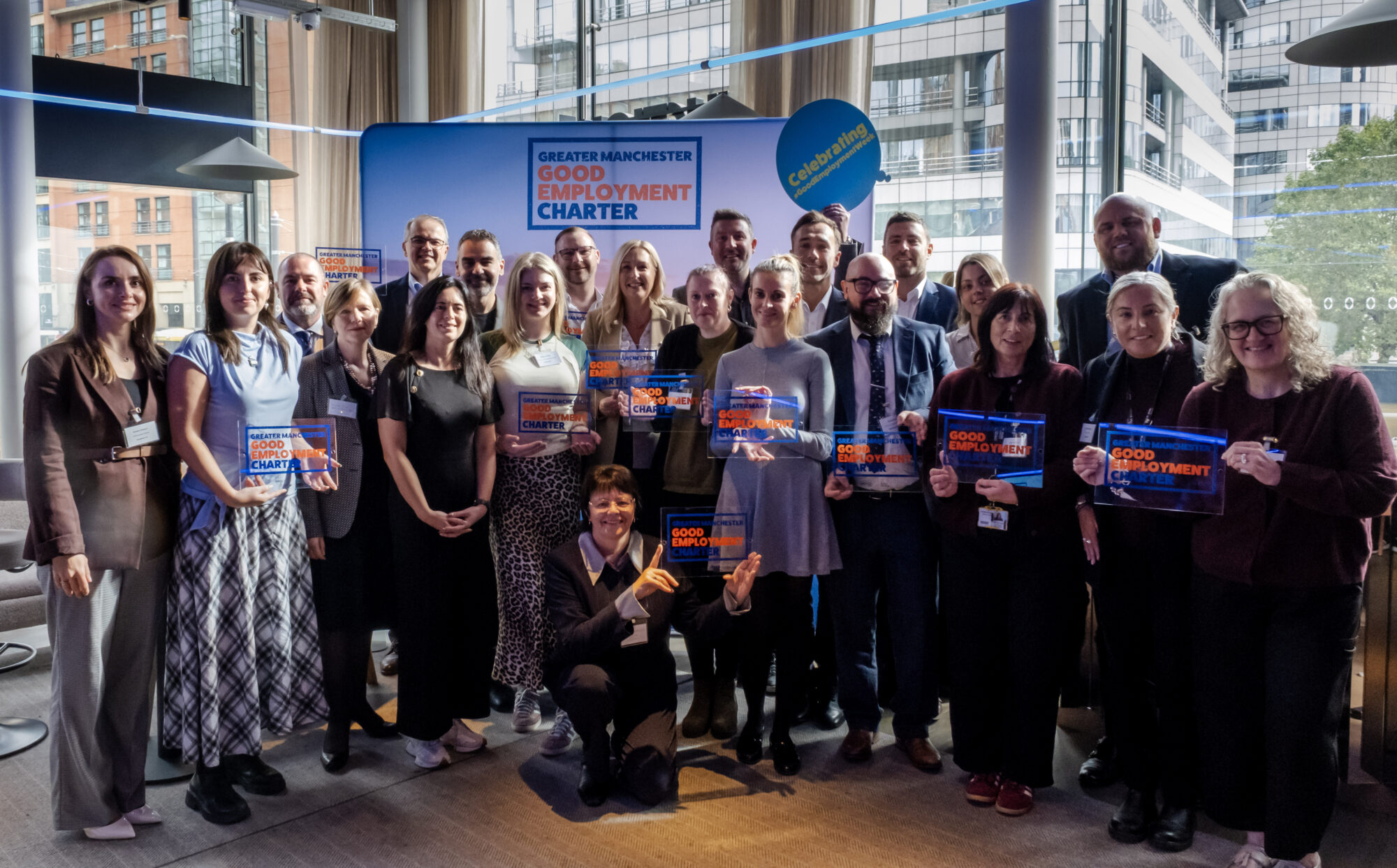
Carlisle Support Services has proudly kicked off Good Employment Week 2026 by receiving its Greater Manchester Good Employment Charter Full Member certificate in person from

Carlisle Support Services announces the appointment of Chris Wright as Head of Operations (South) for the Arts & Culture client portfolio, strengthening the company’s leadership team

